
Exploring the Benefits and Availability of GHK-Cu in Australia. GHK-Cu, a naturally occurring peptide complex found in human plasma, has gained attention for its potential benefits in skin health, hair growth, and tissue repair. As research progresses, understanding its role and accessibility within Australia becomes increasingly important for those interested in advanced skincare and regenerative solutions. This article aims to provide a clear overview of what GHK-Cu is, its scientifically supported advantages, and how it can be found and utilized in Australia.
Key Takeaways
- GHK-Cu is a naturally occurring copper peptide in the body that plays a role in tissue repair and regeneration, with levels declining as we age.
- Research suggests GHK-Cu offers significant benefits for skin health, including anti-aging properties, by supporting collagen and elastin production.
- The peptide also shows promise in supporting hair growth and strength, potentially by improving follicle health and the hair growth cycle.
- GHK-Cu has a documented history in wound healing research, demonstrating its capacity for tissue repair and remodelling.
- While research is ongoing, GHK-Cu is available in Australia through various skincare products, with formulations and concentrations needing careful consideration for stability and effectiveness.
Understanding GHK-Cu In Australia
What Is GHK-Cu?
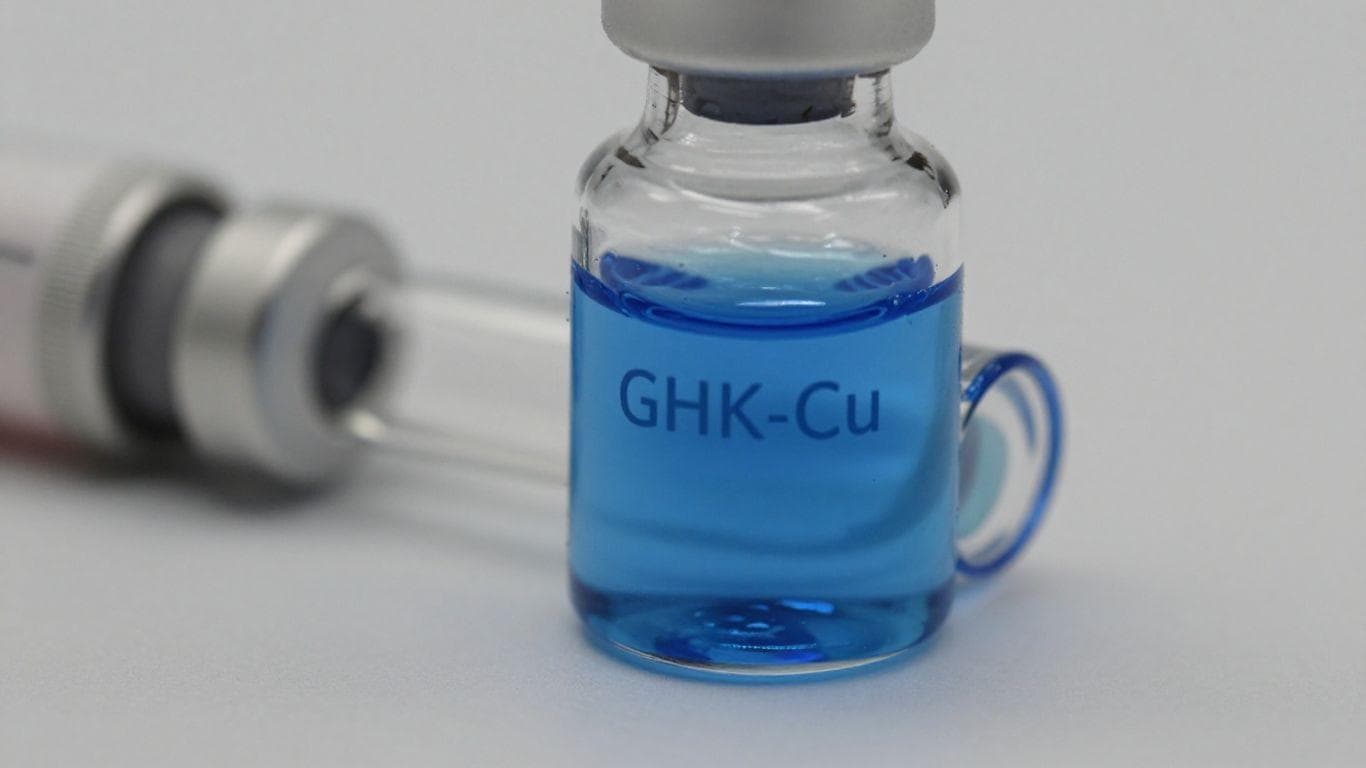
GHK-Cu, also known as Copper Tripeptide-1, is a naturally occurring peptide found in human plasma. It’s a small chain of amino acids linked with a copper ion. This compound was first identified back in 1973 by Dr. Loren Pickart while he was studying why young blood seemed to rejuvenate older liver tissue. He pinpointed this peptide as the key player. It’s fascinating because its levels in our bodies drop significantly as we get older. This decline is thought to be connected to our skin’s reduced ability to repair itself over time. While GHK-Cu is naturally present, a synthetic version, AHK-Cu, has also been developed specifically for hair applications.
Natural Occurrence And Age-Related Decline
As mentioned, GHK-Cu is a normal part of human plasma, but its concentration isn’t constant throughout life. When we’re young, say around age 20, our plasma levels are quite robust, often around 200 ng/mL. However, by the time we reach 60, this level can drop to about 80 ng/mL. This reduction is a big reason why scientists and skincare formulators are so interested in it, especially for anti-aging purposes. It suggests that supplementing or supporting these natural levels could help our skin maintain its functions as we age. This natural decline is a key driver for exploring its use in skincare and other applications.
The Science Behind GHK-Cu
The science behind GHK-Cu is pretty interesting. It’s known to interact with our cells in several ways. For starters, it seems to encourage the production of things like collagen and elastin, which are super important for keeping skin firm and elastic. It also plays a role in wound healing by helping to remodel tissue and attract cells needed for repair. Research has even shown that GHK-Cu can influence the expression of thousands of human genes, nudging them towards repair processes and away from inflammation. It acts as a carrier for copper ions, which are vital cofactors for many enzymes involved in skin health, like those that help cross-link collagen and act as antioxidants. The peptide is most stable in a specific pH range, around 5.5?6, which is something formulators need to consider carefully. Using it with strong acids, like some vitamin C serums, can actually break it down, making it less effective and potentially causing irritation. This sensitivity is why proper formulation matters for products containing GHK-Cu.
Key Benefits Of GHK-Cu For Skin And Hair
GHK-Cu, a naturally occurring copper peptide, offers a range of benefits that are particularly noteworthy for skin and hair health. Its ability to interact with cellular processes makes it a compound of significant interest in cosmetic and regenerative applications.
Skin Health And Anti-Aging Properties
One of the most recognized benefits of GHK-Cu is its impact on skin health, especially concerning aging. It plays a role in supporting the skin’s structure by encouraging the production of key proteins like collagen and elastin. These proteins are vital for maintaining skin’s firmness and elasticity. As we age, the natural production of these components tends to decrease, leading to visible signs of aging such as wrinkles and sagging. GHK-Cu helps to counteract this by stimulating the cells responsible for producing these structural elements.
- Stimulates collagen and elastin synthesis: This leads to improved skin firmness and elasticity.
- Supports fibroblast activity: These cells are crucial for producing the building blocks of healthy skin.
- Aids in skin repair: It helps the skin recover from damage caused by environmental factors.
The peptide’s influence on gene expression suggests a broad impact on cellular repair mechanisms, contributing to a more resilient and youthful appearance over time.
Supporting Hair Growth And Strength
Beyond its effects on the skin, GHK-Cu also shows promise for hair health. Research indicates that it can support the hair follicle environment, potentially leading to stronger, healthier hair. By influencing factors related to blood vessel growth and fibroblast function, GHK-Cu may improve the delivery of nutrients to the hair follicles. This improved nourishment is thought to contribute to hair resilience and can be beneficial in contexts where hair thinning is a concern. Some studies have observed an increase in hair density and thickness with the topical application of copper peptides, though more extensive human trials are ongoing.
Wound Healing And Tissue Repair Capabilities
Much of the foundational research into GHK-Cu focused on its capacity for wound healing and tissue repair. The peptide has demonstrated an ability to accelerate the healing process in various studies. It appears to promote the formation of new blood vessels, which is critical for delivering oxygen and nutrients to injured areas. Furthermore, GHK-Cu influences the remodeling of tissues, helping to restore structure and function. Its anti-inflammatory properties also contribute to a more favorable healing environment, calming reactive tissues and supporting the body’s natural repair mechanisms. This makes it a compound of interest not only in skincare but also in broader regenerative medicine applications. You can find research-grade peptides, including GHK-Cu, for scientific exploration here.
- Accelerates wound closure.
- Improves vascularization at injury sites.
- Reduces inflammation, aiding recovery.
- Enhances collagen deposition for tissue rebuilding.
GHK-Cu’s Role In Cellular Processes
Extracellular Matrix Support
GHK-Cu is pretty amazing at helping your skin maintain its structure. It signals to your skin cells, specifically fibroblasts, to ramp up production of collagen and elastin. These are the proteins that give your skin its firmness and elasticity. Think of them as the scaffolding that keeps everything looking plump and smooth. As we get older, our natural production of these proteins slows down, and GHK-Cu seems to help counteract that. It also encourages the creation of glycosaminoglycans, which are important for keeping skin hydrated and plump.
- Stimulates fibroblast activity
- Boosts collagen and elastin synthesis
- Supports glycosaminoglycan production
Anti-Inflammatory And Antioxidant Effects
Beyond just structural support, GHK-Cu also acts as a protector for your cells. It has been observed to reduce the levels of certain inflammatory markers in the body, which can help calm down irritated skin. This is likely why products containing GHK-Cu are often well-tolerated, even by those with sensitive complexions. Furthermore, it helps your skin defend itself against oxidative stress. It doesn’t just block free radicals; it actually supports your skin’s own antioxidant enzymes, like superoxide dismutase, making it more resilient. This dual action helps protect against damage from things like UV rays and pollution.
GHK-Cu helps your skin in two main ways: by calming down inflammation and by boosting its natural defenses against damage. This makes it a great ingredient for overall skin health and resilience.
Gene Expression Modulation
This is where things get really interesting. GHK-Cu has the ability to influence how thousands of genes behave. It can essentially tell genes involved in tissue repair and regeneration to become more active, while potentially quieting down genes associated with tissue breakdown. This broad impact on gene expression is a big part of why GHK-Cu is studied for its regenerative capabilities. It’s not just a surface-level fix; it’s working at a deeper, cellular level to promote a healthier environment for your skin and tissues. Research into how GHK-Cu modulates genes is ongoing and shows its potential for more than just cosmetic applications.
Availability And Application Of GHK-Cu In Australia
Where To Find GHK-Cu Products
Finding GHK-Cu products in Australia involves looking at both specialized skincare brands and research chemical suppliers. For those interested in topical applications, many cosmetic companies now formulate serums, creams, and lotions containing GHK-Cu. These are often marketed for their anti-aging and skin repair properties. When selecting a product, it’s wise to check the concentration of GHK-Cu, as research suggests effectiveness can be achieved at relatively low levels. Some brands offer different strengths, like 0.5% for sensitive skin or daily use, and 1% for more experienced users or those seeking stronger effects. You can find these types of products from trusted Australian skincare retailers, both online and in select physical stores. For those looking for GHK-Cu for laboratory research purposes, specialized chemical suppliers are the primary source. These suppliers often provide GHK-Cu in powder or solution form, intended strictly for in-vitro or research applications. It’s important to note that products intended for research are not for human consumption or topical application on skin. Purchasers must be at least 18 years old and adhere to the supplier’s terms of use, which typically restrict usage to scientific investigation. Some companies also offer AHK-Cu, a related peptide specifically formulated for hair and scalp applications, which might be found alongside GHK-Cu products.
Formulation Considerations For Stability
Copper peptides like GHK-Cu are known to be quite sensitive ingredients. They don’t always play well with light, air, or certain pH levels, which means their potency can decrease over time, even before you get the product. This is why formulation really matters. GHK-Cu tends to be most stable when the product’s pH is around 5.5 to 6. If a formulation is too acidic, it can break down the peptide. This is also why you generally shouldn’t mix GHK-Cu products with strong acids, like some glycolic acid treatments or low-pH vitamin C serums. Doing so can destabilize the peptide and might even irritate your skin. When looking for GHK-Cu products, consider brands that pay attention to these formulation details to ensure you’re getting a stable and effective ingredient. Some companies focus on creating stable formulations, understanding that higher concentrations aren’t always better and that careful formulation is key to delivering the peptide’s benefits.
Professional Administration And Guidance
While many GHK-Cu products are available over-the-counter for topical use, there are instances where professional administration is recommended or even necessary. In some aesthetic and wellness clinics, GHK-Cu might be offered as part of injectable treatments, such as mesotherapy, or even included in IV therapy protocols. These methods aim to deliver the peptide more directly to target tissues. Injectable applications, whether into the skin or scalp, should always be performed by trained healthcare professionals to ensure safety and proper technique. It’s also worth noting that no single dosage for GHK-Cu has been universally agreed upon; protocols can differ based on the clinic and the intended use. Even though GHK-Cu has a generally favorable safety profile and is naturally occurring, its use in injectable forms requires professional supervision. Clinics often combine these treatments with lifestyle advice, like nutrition and sleep, and may pair them with other procedures. For any professional administration of GHK-Cu, seeking guidance from a qualified practitioner is paramount for both safety and achieving desired outcomes.
When considering GHK-Cu, especially for applications beyond standard topical skincare, it’s important to remember that individual results can vary. Factors like your baseline health, how consistently you use the product, and other lifestyle habits all play a role. Professional guidance can help set realistic expectations and tailor a plan that suits your specific needs.
Exploring Potential Systemic Applications
Beyond Skin and Hair Benefits
While GHK-Cu is widely recognized for its positive effects on skin and hair, its influence might extend much further. Researchers are looking into how this peptide could play a role in other parts of the body. Think about its ability to signal cells and encourage repair; this suggests it could be helpful in areas beyond just topical applications. Early studies and theoretical models point to potential benefits for tissues like the lungs, liver, and bones, as well as general connective tissue health. It’s also being investigated for its effects on stem cells and even pathways related to aging and cognitive function. The idea is that by influencing gene expression, GHK-Cu might support the body’s natural repair mechanisms on a broader scale.
Current Research and Future Potential
It’s important to note that most of the research so far has focused on how GHK-Cu works when applied to the skin. This means we have a good understanding of its topical benefits, like aiding in wound healing and improving skin texture [1c99]. However, when we talk about systemic applications ? meaning how it might affect the whole body ? the human studies are still quite limited. Much of the current evidence comes from lab work or animal studies.
Here’s a look at some areas being explored:
- Tissue Repair: Investigating its role in repairing damage in organs like the liver and lungs.
- Stem Cell Activity: Understanding how it might influence stem cells for regenerative purposes.
- Anti-Aging Pathways: Exploring its connection to cellular aging processes and longevity.
- Cognitive Health: Preliminary research into potential effects on brain function.
While these systemic applications are exciting, they are still in the early stages. More extensive clinical trials in humans are needed to confirm these potential benefits and to figure out the best ways to deliver GHK-Cu for these purposes. It’s a promising area, but one that requires careful, professional investigation.
The potential for GHK-Cu to influence a significant portion of human genes suggests a wide-reaching biological impact. This broad gene modulation capability is what fuels the interest in its systemic effects, moving beyond localized tissue improvements to potentially influencing overall cellular health and repair processes throughout the body.
Thinking about how our products could fit into bigger projects? We’re exploring exciting possibilities for how they can be used in various systems. Want to see what we’ve come up with so far? Visit our website to learn more about these potential applications and discover how they might benefit you. We’re always looking for new ways to innovate, and we’d love for you to be a part of it!
Wrapping Up Our GHK-Cu Exploration
So, we’ve looked into GHK-Cu and its potential benefits, especially for skin and hair. It seems like a pretty interesting ingredient, with research pointing to its role in helping the body repair itself and keep things like collagen and elastin in check. While it’s naturally found in us, levels do drop as we get older, which is why it’s become a focus for skincare and even some regenerative medicine ideas. Finding it in Australia is becoming easier, with various brands and clinics offering it, though it’s always smart to check the specifics of what you’re getting and how it’s made. Remember, while the science is promising, individual results can differ, and it’s often best used as part of a broader approach to wellness.
Frequently Asked Questions
What exactly is GHK-Cu?
GHK-Cu is a small, naturally occurring molecule in your body made of three amino acids linked together and a copper atom. Think of it like a tiny helper that plays a big role in keeping your skin and tissues healthy. It’s found in things like your blood and saliva, but its levels tend to drop as you get older.
Why is GHK-Cu important for skin?
GHK-Cu is like a signal that tells your skin cells to repair themselves. It helps your skin make more collagen and elastin, which are like the building blocks that keep skin firm and stretchy. This can help reduce the look of wrinkles and make skin appear younger and healthier.
Can GHK-Cu help with hair growth?
Some research suggests that GHK-Cu might help support hair growth. It’s thought to improve blood flow to the scalp and help hair follicles stay healthy, potentially making hair look thicker and stronger. There’s also a similar copper peptide, AHK-Cu, that’s specifically studied for hair benefits.
Where can I find GHK-Cu products in Australia?
You can find GHK-Cu in various skincare products, such as serums and creams, available from cosmetic companies and specialized skincare retailers in Australia. It’s also sometimes used in professional treatments at clinics. Always check the ingredient list to ensure it contains Copper Tripeptide-1 (which is GHK-Cu).
Are there any side effects or things to be careful about when using GHK-Cu?
GHK-Cu is generally considered safe and well-tolerated, even by sensitive skin, because it also has calming effects. However, like any skincare ingredient, some people might experience mild irritation. It’s also important to note that copper peptides can be sensitive to certain ingredients, like strong acids, so it’s best to avoid using them together.
Does GHK-Cu have benefits beyond skin and hair?
Scientists are exploring if GHK-Cu might have broader effects on the body. Early studies and theories suggest it could play a role in healing and repairing other tissues, like those in the lungs or liver, and might even influence how our genes work to promote overall health. More research is needed in these areas.